


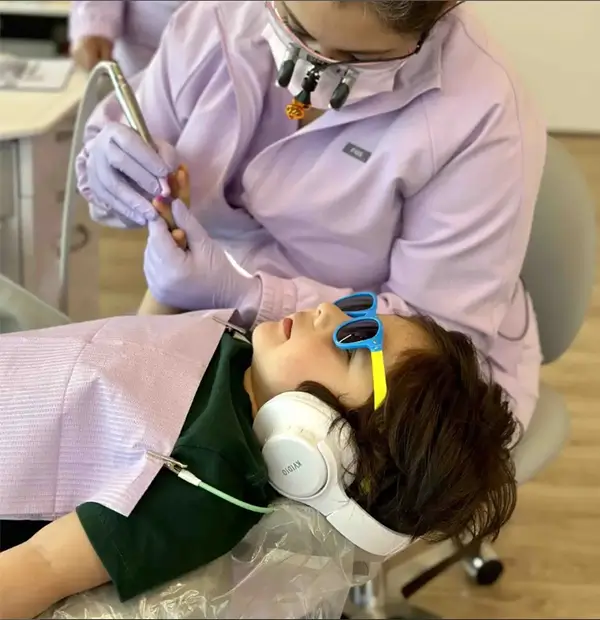
Are you looking for information about lip tie treatment in Ashburn, VA, for your child? A restrictive lip tie can sometimes affect upper lip movement or contribute to feeding concerns during infancy. A pediatric dental evaluation can help determine whether the tissue is causing a functional problem and whether treatment may be appropriate.
At Lansdowne Pediatric Dentistry, we help parents understand their children’s oral health needs and explore appropriate care options. Whether you have noticed restricted lip movement or have questions about a possible lip tie, our team can help you understand the evaluation process and determine the next steps for your child.
A lip tie occurs when the labial frenulum, the band of tissue connecting the inside of the upper lip to the gums, restricts normal lip movement. This tissue is a natural part of oral anatomy, but its thickness, attachment, and flexibility can vary among children.
Some children have a prominent frenulum without experiencing any difficulties. Others may have concerns related to feeding or upper lip mobility. A pediatric dental professional can examine the tissue and assess whether it is contributing to a specific functional problem.
Not every child with a visible lip tie needs treatment. The decision should depend on the child’s symptoms, oral function, and individual needs rather than appearance alone.
Lip tie symptoms can vary according to a child’s age and the degree of tissue restriction. Parents may first notice concerns during infancy, while other children may have a prominent frenulum identified during a routine dental visit.
Possible signs include:
These signs do not automatically mean a lip tie requires correction. Feeding difficulties and dental spacing can have several causes, so a professional evaluation is important before deciding on a procedure.
If you notice these concerns, a pediatric dental assessment can help clarify whether the frenulum is affecting your child’s oral function.
The effects of a lip tie depend on the location and degree of tissue restriction. In some infants, limited upper lip movement may contribute to breastfeeding difficulties. However, feeding problems can involve several factors, including latch technique and oral coordination. A comprehensive assessment can help identify possible causes.
As children grow, parents may have questions about upper lip movement or spacing between the upper front teeth. A prominent frenulum can sometimes be associated with a gap, but spacing may also occur naturally during dental development. The child’s age, tooth position, and overall oral health should be considered before recommending treatment.
Speech concerns also deserve careful evaluation. A lip tie is not necessarily responsible for speech difficulties, and releasing the tissue does not guarantee speech improvement. If feeding or speech challenges persist, the dentist may recommend consultation with the child’s pediatrician, lactation consultant, or speech-language pathologist when appropriate.
Families searching for lip tie Ashburn VA can start by understanding how a pediatric dental evaluation works. The dentist examines the frenulum, assesses upper lip mobility, and discusses any concerns reported by the parents.
The evaluation may include questions about feeding history, oral discomfort, dental development, and previous recommendations from other healthcare professionals. Your child’s age and individual circumstances help guide the next steps.
If the tissue is not causing functional difficulties, monitoring may be sufficient. When a restriction contributes to a specific concern, the dentist can explain potential treatment options and discuss their benefits, limitations, and risks.
An individualized assessment helps parents understand whether intervention is appropriate rather than relying on the appearance of the frenulum alone.
A lip tie release modifies the restrictive tissue connecting the upper lip to the gums. Depending on the technique used, the procedure may be called a labial frenotomy or labial frenectomy. The goal is to improve upper lip mobility when the restriction causes a clinically significant problem.
Some pediatric dental providers use laser technology for selected frenulum procedures. The appropriate method depends on the child’s anatomy, age, symptoms, and the treating dentist’s clinical judgment.
Before proceeding, parents should understand what the procedure involves, how discomfort will be managed, and what to expect during recovery. The dentist should also explain possible complications, follow-up requirements, and the outcomes that can reasonably be expected.
Lip tie release is not necessary for every child with a prominent frenulum. Treatment should be recommended only when an assessment supports a potential benefit for the child’s individual needs.
Recovery varies depending on the procedure and the child’s circumstances. The dental team will provide instructions for keeping the treated area clean, managing discomfort, and monitoring healing.
Parents should follow the recommended aftercare plan and attend any scheduled follow-up appointments. These visits allow the dentist to assess healing and discuss whether the original functional concern has improved.
Contact the treating provider if your child experiences persistent bleeding, increasing swelling, worsening pain, fever, or difficulty feeding after the procedure. Prompt medical guidance can help determine whether further assessment is necessary.
Depending on the reason for treatment, additional support from a pediatrician, lactation consultant, or other healthcare professional may also be beneficial.
Parents seeking lip tie treatment in Ashburn, VA, deserve clear information about their child’s condition and available options. A professional evaluation can help determine whether a restrictive frenulum is affecting oral function and whether monitoring or treatment is appropriate.
Lansdowne Pediatric Dentistry provides pediatric dental care focused on children’s individual needs. Our team can help families understand their evaluation findings, discuss recommended procedures, and make informed decisions about their child’s oral health.
If you live in Ashburn and have concerns about your child’s upper lip movement, feeding history, or oral development, contact Lansdowne Pediatric Dentistry to ask about evaluation options and appointment availability.
No. Many children with a prominent frenulum do not experience functional problems and may not need treatment. A dental evaluation helps determine whether monitoring or intervention is appropriate.
A restrictive upper lip frenulum may contribute to breastfeeding difficulties in some infants, but feeding problems can have several causes. An appropriate assessment can help determine whether the tissue may be contributing to the difficulty.
A lip tie release modifies the restrictive frenulum to improve mobility when clinically indicated. The technique, comfort measures, and recovery instructions depend on the child’s needs and the dentist’s recommendations.
Contact the practice directly to confirm which techniques are currently available and whether laser treatment is appropriate for your child’s circumstances.
Visit the Lansdowne Pediatric Dentistry contact page to inquire about appointment availability and evaluation options for your child.
Understanding a lip tie is an important step toward making informed decisions about your child’s oral health. Not every restrictive frenulum requires treatment, but an evaluation can help clarify whether the tissue affects normal function and whether further care may be beneficial.
Lansdowne Pediatric Dentistry is committed to helping families understand their children’s dental needs and explore appropriate treatment options. Contact Lansdowne Pediatric Dentistry today to schedule an evaluation and learn more about lip tie care for children near Ashburn, VA.